The short version
Research peptides are almost always made chemically, not extracted from the body. The standard method, solid-phase peptide synthesis, was introduced by Bruce Merrifield in 1963 and is now automated.1 Most labs use the Fmoc version of it.2
This page describes the general method used across the industry. The images are illustrative and do not show a specific manufacturer’s facility.
Why it’s built backward
Solid-phase synthesis grows a peptide from its last amino acid to its first. For BPC-157, valine (position 15) is anchored to the resin first and glycine (position 1) is added last.
Each amino acid arrives with a temporary protecting group on its reactive end. A cycle removes that group, washes the beads, couples the next protected amino acid, and washes again. Because the growing chain stays attached to the beads, excess reagents can simply be washed away after each step.1,2
Seven steps, powder to pen
-
01
Building blocks
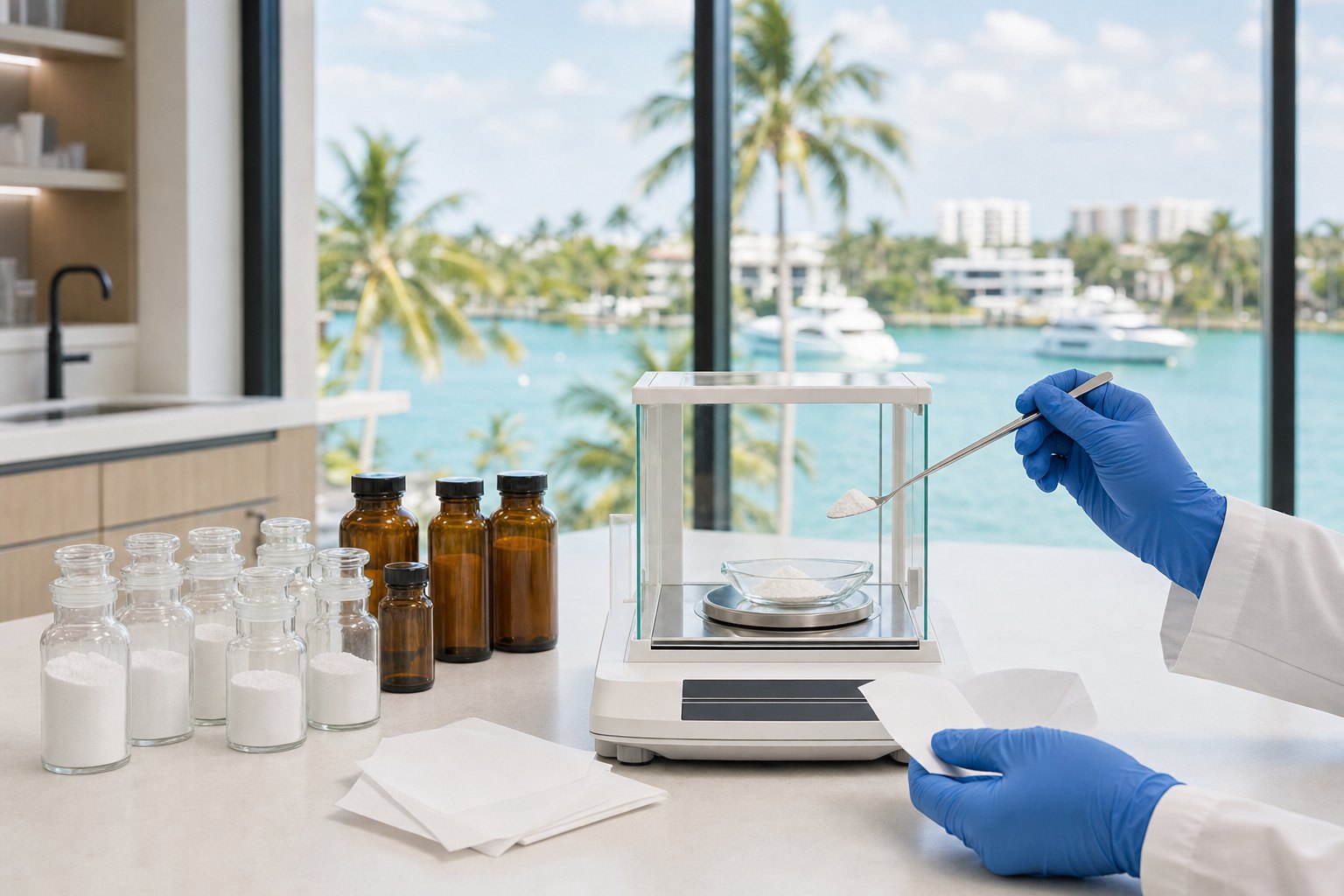
Weigh the amino acids
Protected amino acids, one type for each position, are weighed out as fine white powders. BPC-157 uses eight different amino acids across its 15 positions.
 Image
-
02
Chain assembly
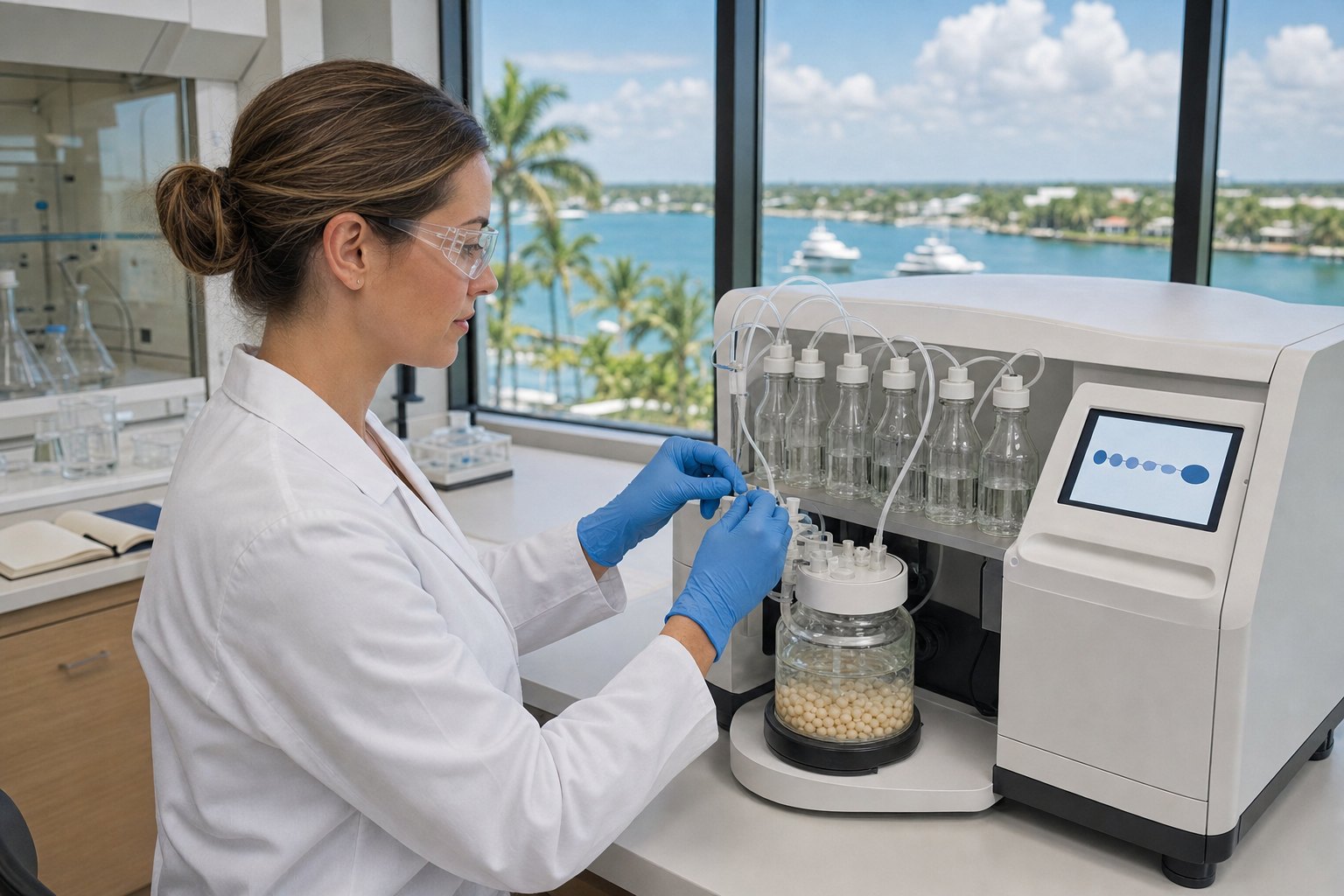
Grow the chain on resin
An automated synthesizer runs one deprotect, wash, couple and wash cycle per amino acid, building the sequence on resin beads inside a glass reaction vessel.
 Image
-
03
Cleavage
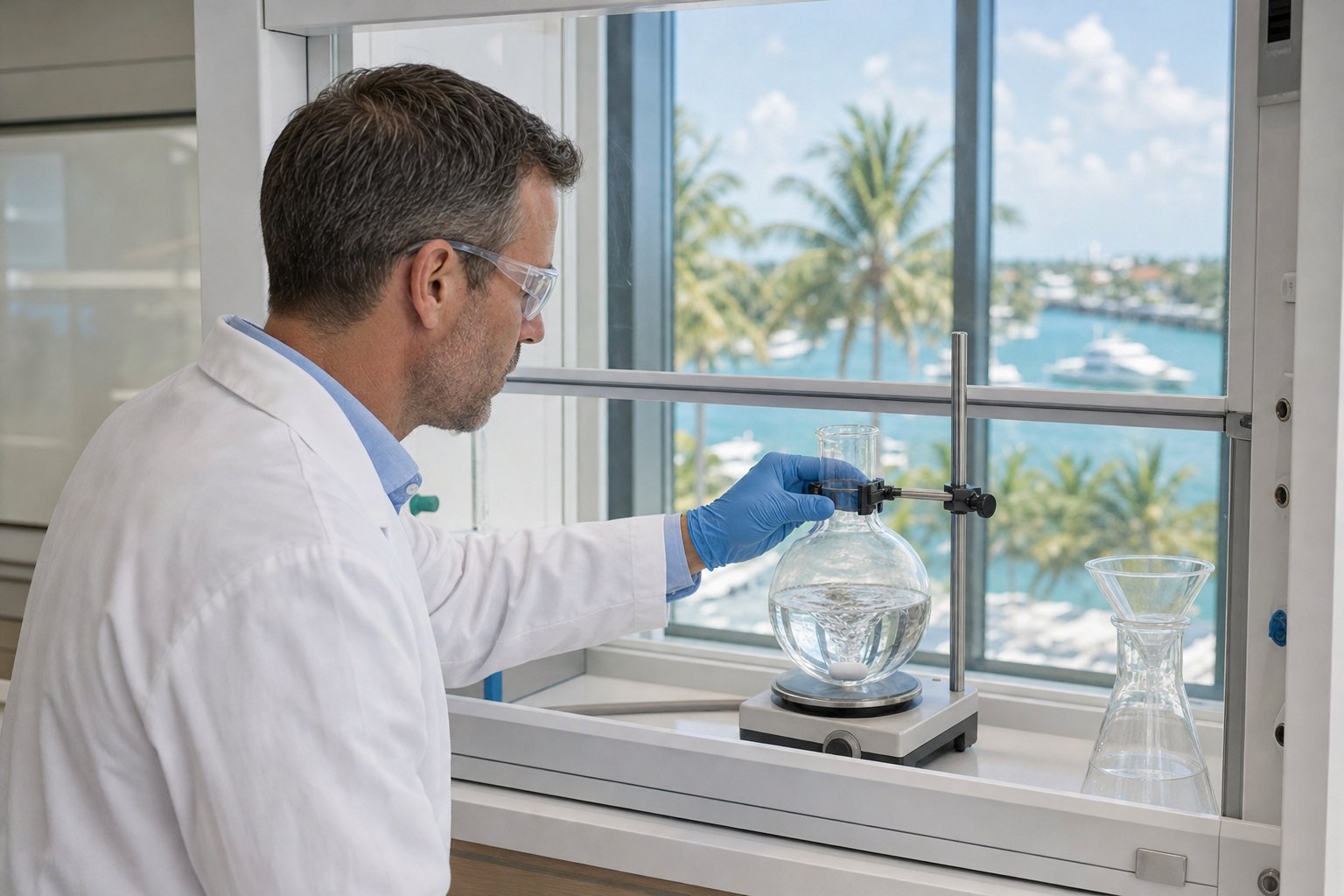
Release the peptide
An acid treatment in a fume hood cuts the finished chain from the resin and removes the remaining protecting groups, leaving crude peptide.
 Image
-
04
Purification
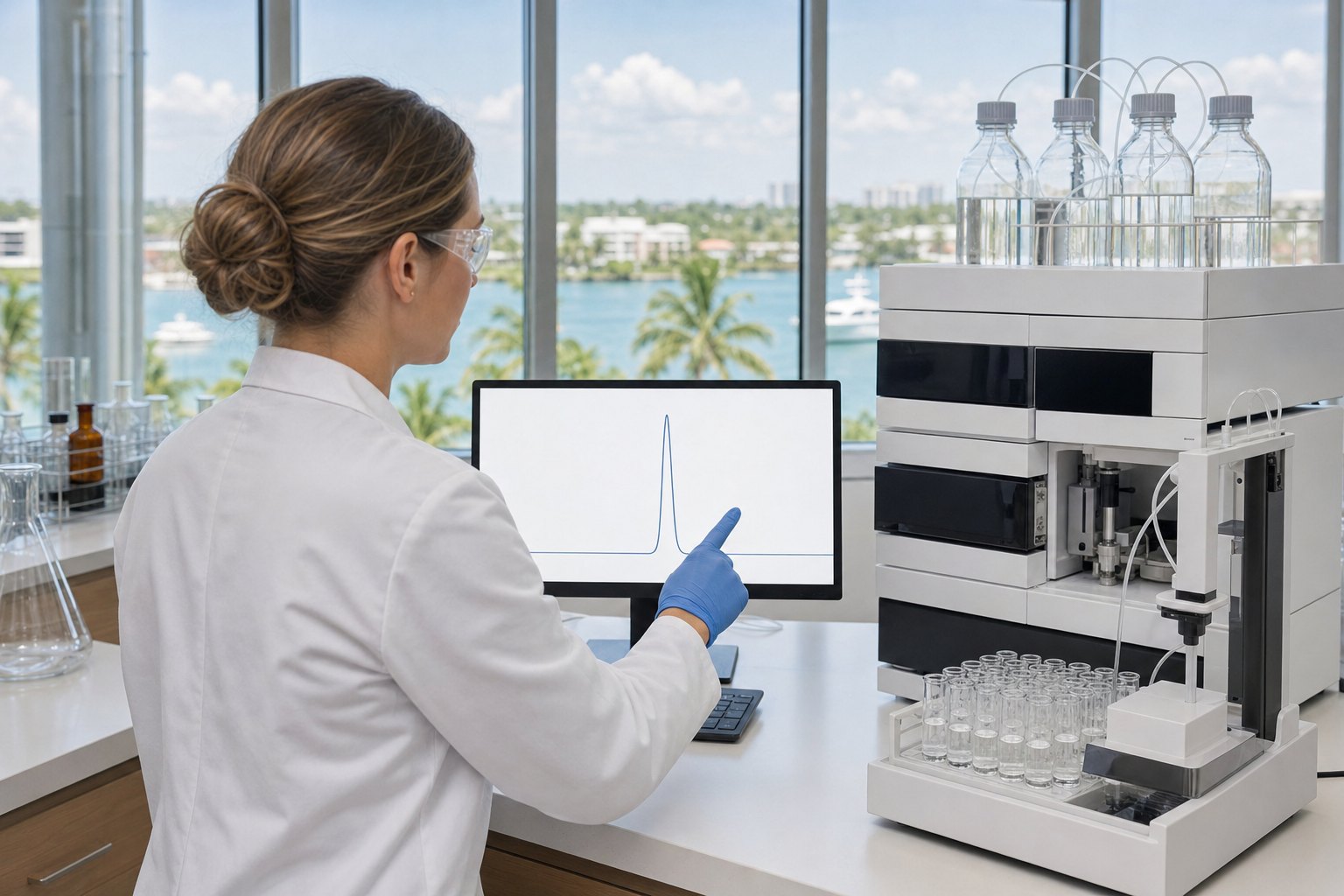
Separate by HPLC
High-performance liquid chromatography separates full-length BPC-157 from shorter or flawed chains. Mass spectrometry then confirms the molecular weight, about 1419.5 g/mol.
 Image
-
05
Freeze-drying
Dry to a stable powder
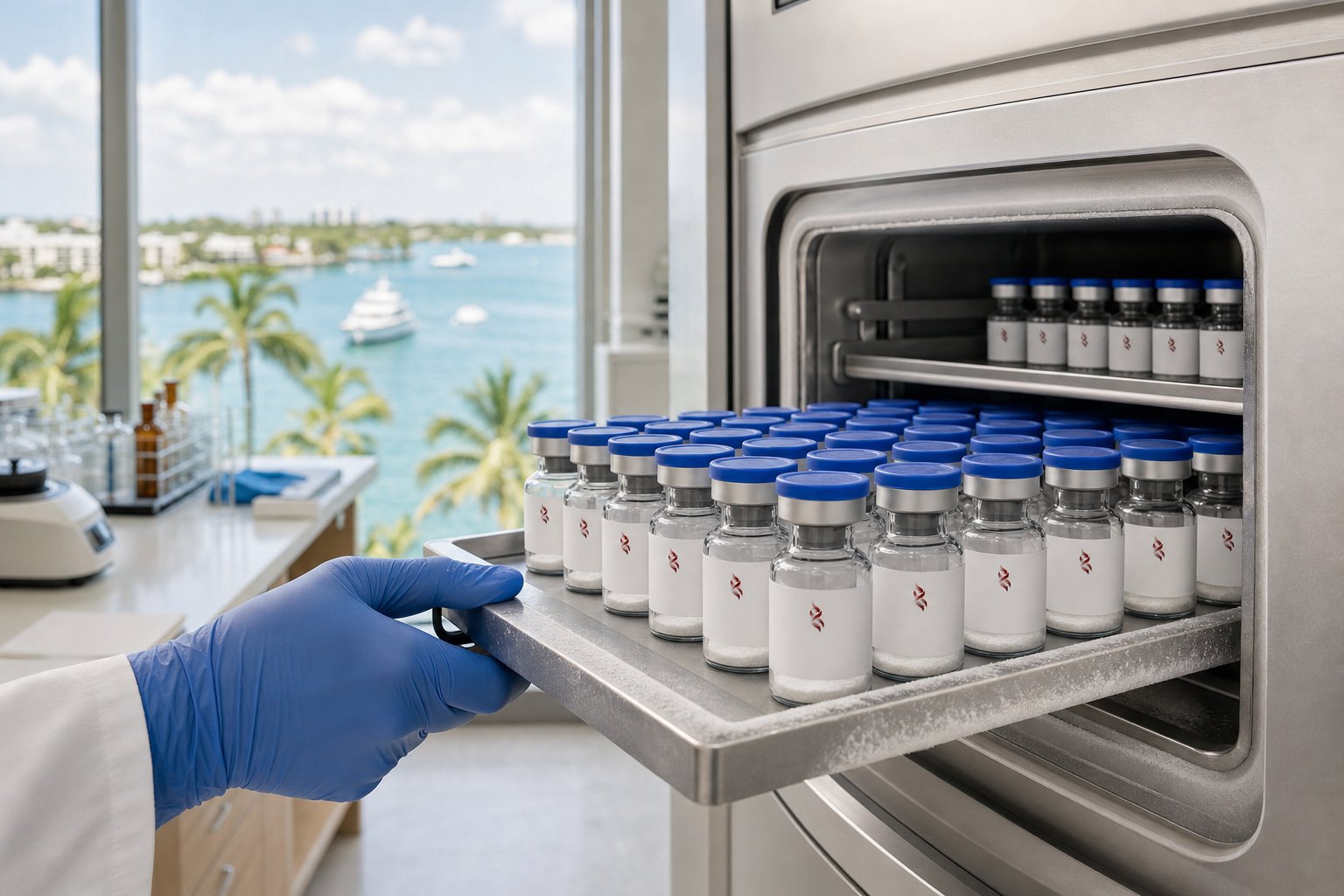
Purified peptide is usually freeze-dried (lyophilized) into a powder that is easier to store and ship before it is dissolved for liquid products.
 Image
-
06
Fill and seal
Dissolve and fill
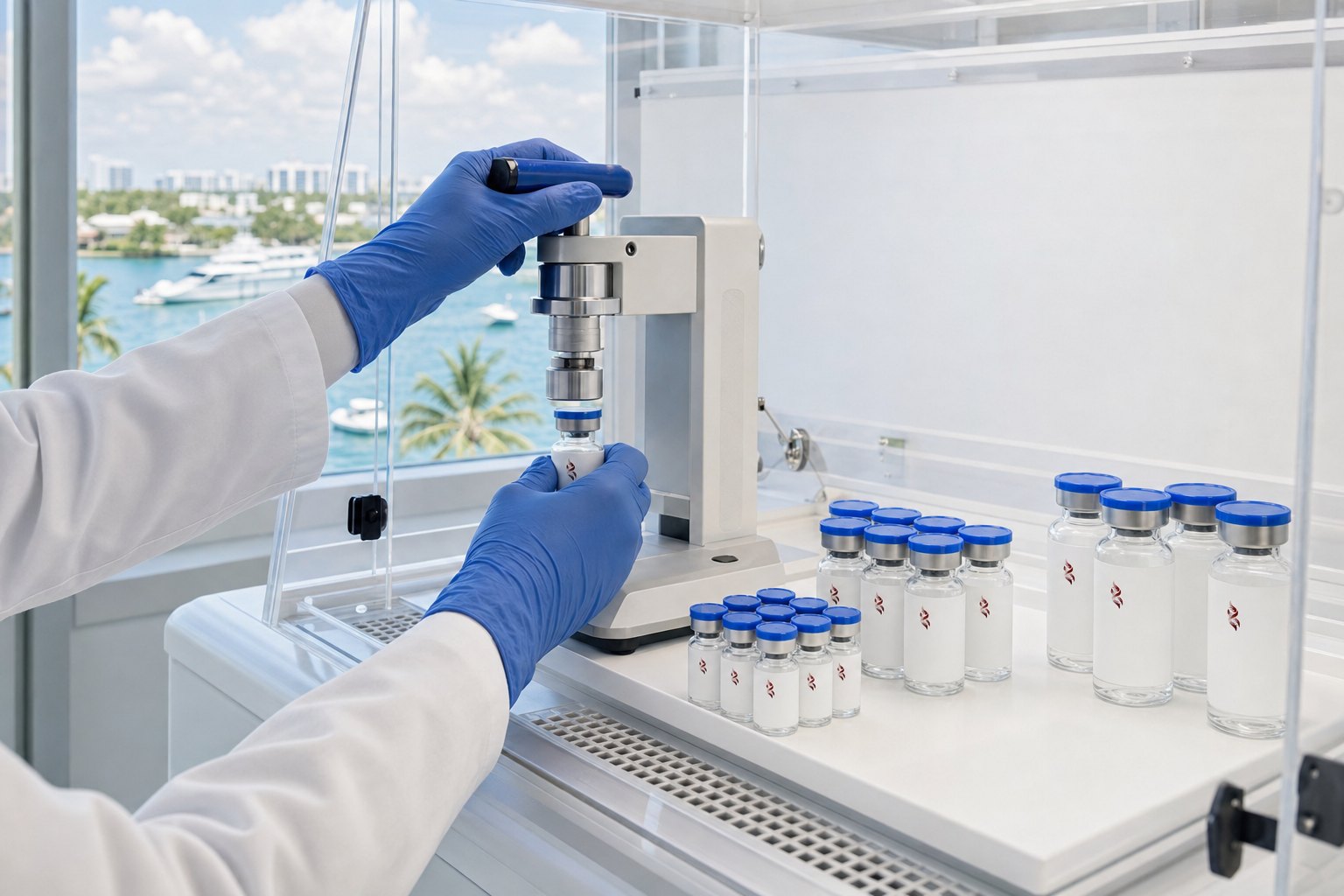
For ready-to-use formats, the peptide is dissolved and filled into 10 mL vials or 3 mL pen cartridges, then sealed. Palm Beach Vitality vials come in 2, 5 and 10 mL sizes; BPC-157 uses the 10 mL vial.3
 Image
-
07
Inspection
Label and check
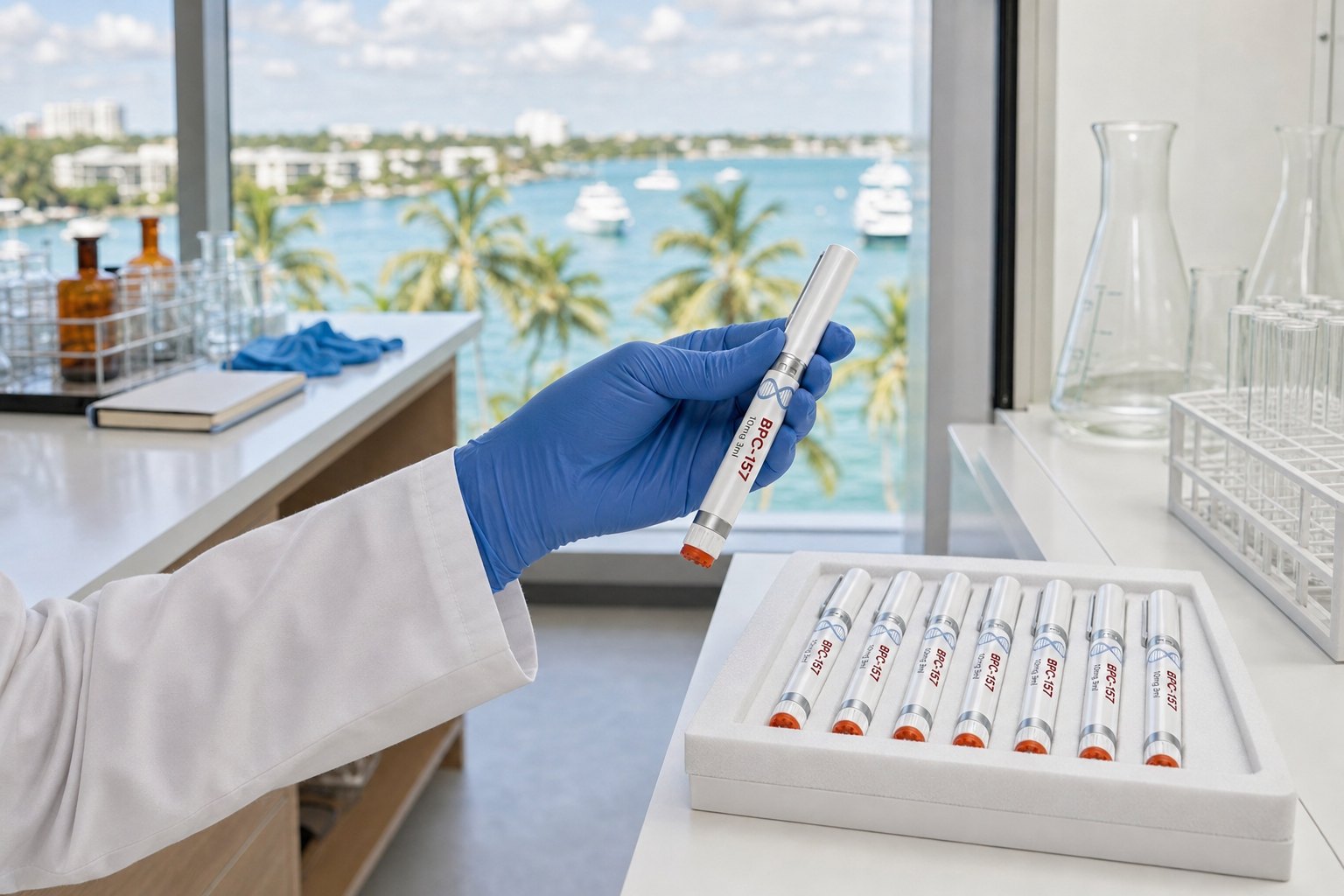
Each pen and vial is labeled with its lot number, which ties it to that batch’s certificate of analysis.
 Image
Watch the chain form
The 15 amino acids of BPC-157 join through 14 peptide bonds into one unbranched chain.
Sources
- Merrifield RB. Solid phase peptide synthesis. I. The synthesis of a tetrapeptide. J Am Chem Soc. 1963;85:2149–2154. doi:10.1021/ja00897a025
- Behrendt R, White P, Offer J. Advances in Fmoc solid-phase peptide synthesis. J Pept Sci. 2016;22(1):4–27. doi:10.1002/psc.2836
- Palm Beach Vitality. BPC-157 10mg and 20mg pen and vial product specifications, accessed November 15, 2026. palmbeach-vitality.store